




Sunita Williams’ space mission highlights groundbreaking research, human endurance testing, and space technology advancements. Her journey inspires young minds to explore STEM education while expanding our understanding of the universe. Learn why she went to space, her mission goals, and when she is expected to return.
Table of Contents
Introduction
Imagine yourself floating in space and looking down at Earth!
It sounds thrilling, right?
Exploration of space is about more than simply rockets; it’s about pushing human boundaries, developing new technologies, and learning about the unexplored. Sunita Williams and other astronauts encourage us to aim high and have great ambitions.
Revolutionary inventions like satellite communications, improved healthcare and climate monitoring have all evolved from space travel. By testing new space technologies and researching microgravity astronauts will advance our knowledge of life beyond Earth.
In this blog, we will explore why Sunita Williams go to space? her mission objectives and the impact of her journey on science and technology. We will also talk about how SPIS School motivates children to explore new horizons, like astronauts by including science and technology into the curriculum.
Let’s explore 5 reasons why Sunita Williams go to space:
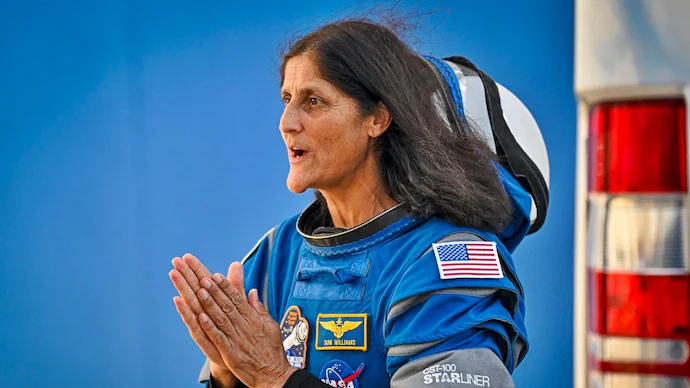
1. To Conduct Scientific Research
Scientific research is one of the primary reasons for space missions. Space offers conditions that are impossible to duplicate on Earth, which makes it an ideal testing area for a variety of research.
We may solve practical problems and build a better future for future generations if we continue our research.
Key Areas of Scientific Research in Space:
1. Medical Discoveries
2. Biological Studies
3. Physics and Material Science
4. Climate and Environmental Research
5. Technology Advancements
From understanding human biology in microgravity to developing new materials, space research opens doors to advancements that impact our daily lives.
2. To Test Human Endurance in Space
Reaching new planets is only one goal of space flight; it is also about learning how the human body survives in harsh environments.
The physical and psychological difficulties of living in space have been studied by scientists with the help of astronauts like Sunita Williams.
Key Areas of Research on Human Endurance in Space:
1. Muscle and Bone Health
2. Mental and Emotional Well-being
3. Effects of Space Radiation
4. Sleep and Circadian Rhythms
5. Immune System Response
It helps people on Earth to test their stamina in space. Osteoporosis treatment, mental health enhancement and medical research advancement are all helped by the knowledge gathered from these studies.
Every discovery we make as we get ready for deep-space missions ensures that future explorers will be able to go farther, stay longer and arrive back in better health.
3. To Improve Space Technology
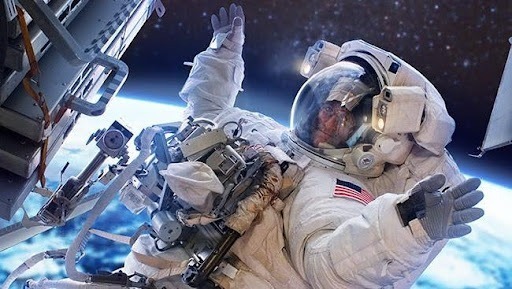
Have you ever wondered how spacecraft continue to function millions of kilometers away from Earth?
To ensure that spaceships, space stations and devices operate well in zero gravity, astronauts like Sunita Williams are essential to the testing and development of space technology.
Key Areas of Space Technology Development:
1. Advanced Spacecraft Design
2. Robotic Innovations
3. Life Support Systems
4. Spacewalk and Repair Techniques
5. Navigation Systems
Every test and experiment in space technology brings us one step closer to making long-term space travel possible.
The technology tested in space often makes its way into our daily lives, from medical devices to energy-efficient systems, which suggests that investing in space technology helps all of humanity.
4. To Expand Human Knowledge of the Universe
Have you ever wondered what’s beyond the night sky?
Space exploration is about human curiosity and the desire to understand our place in the universe. Sunita Williams is contributing to this search by performing research that helps scientists explore space, understand Earth’s environment and reveal the secrets of deep space.
Key Areas of Research That Expand Our Knowledge:
1. Cosmic Radiation Studies
2. Planetary Atmospheres
3. Space Weather Monitoring
4. The Search for Extraterrestrial Life
5. The Origins of the Universe
Learning the greatest mysteries of the universe is the goal of every space mission. The more we learn, the more we realize how much there remains to discover.
By expanding our knowledge, we are not just exploring space, we are exploring the future of humanity.
5. To Inspire the Next Generation
Dreamed of becoming an astronaut?
Sunita Williams is proof that dreams can turn into reality!
She has inspired students all across the world, which is one of the most impactful parts of her journey. Additionally, her story inspires the next generation to explore science, technology and space exploration by generating curiosity to study.
Ways Space Exploration Inspires Young Minds:
1. Encouraging STEM Education
2. Promoting Perseverance and Hard Work
3. Making Space Exploration More Relatable
4. Inspiring Innovation and Creativity
5. Building a Global Perspective
Do you know why did Sunita Williams go to space? She went not just to explore but to learn, innovate and inspire. Because whatever students become scientists, engineers or explorers, they contribute to shaping the future.
Conclusion
Exploration of space is about finding, creating and inspiring!
Sunita Williams’ journey teaches us that with determination and curiosity, we can push the limits of human knowledge. Whether it’s scientific research, testing human endurance, improving technology, understanding the universe or inspiring the next generation.
Space missions like hers help us get closer to cosmic travel, a better understanding of the universe and creative solutions for earthly life as we look to the future.
So, what’s your dream?
Whether it’s space, science or innovation, the universe is waiting for the next big idea. Keep learning, keep exploring and who knows? Maybe one day, you’ll be the one reaching for the stars!
FAQ’s (Frequently Asked Questions)
Why did Sunita Williams go to space?
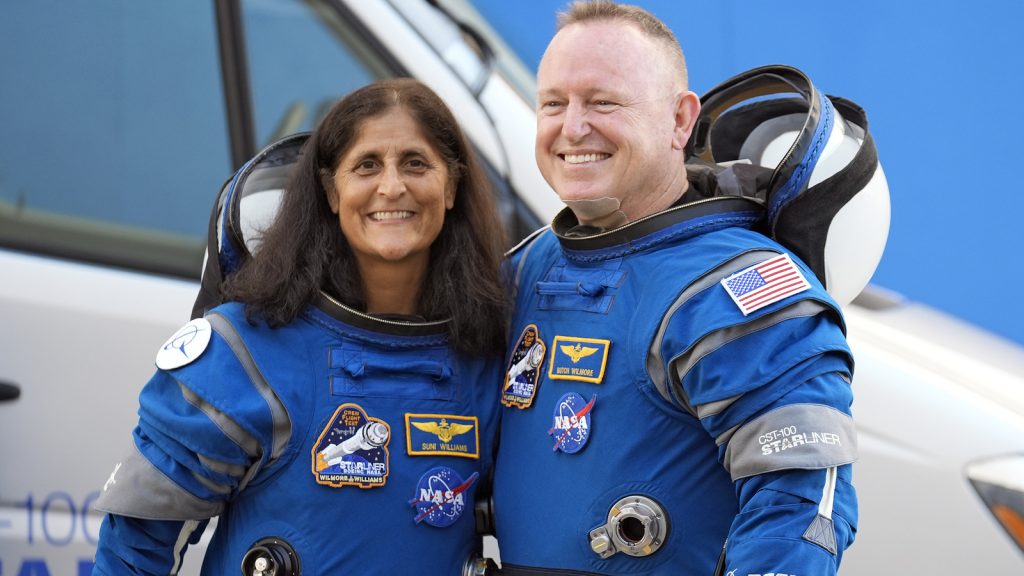
This time, Williams and Wilmore had a brief stop at the ISS. Their trip’s primary goal was to confirm The Starliner’s capabilities to carry out operated trips to the ISS.
Why did Sunita’s hair keep standing in space?
We are aware that the gravitational pull of the Earth keeps our hair in the downward direction. However, there is no similar gravitational pull in space. That was the reason Sunita’s hair stood up.
How long was Sunita Williams in space?
After nine months on the International Space Station (ISS), NASA astronaut Sunita Williams was finally scheduled to return to Earth.
Has Sunita Williams arrived on Earth?
In fact, on Tuesday, March 18th, NASA astronaut Sunita Williams made her way back to Earth.

Founded in 1997 under the aegis of “Shree Gurudatta Education Society". Aims to develop future leaders. Curriculum is based on CBSE New Delhi.