



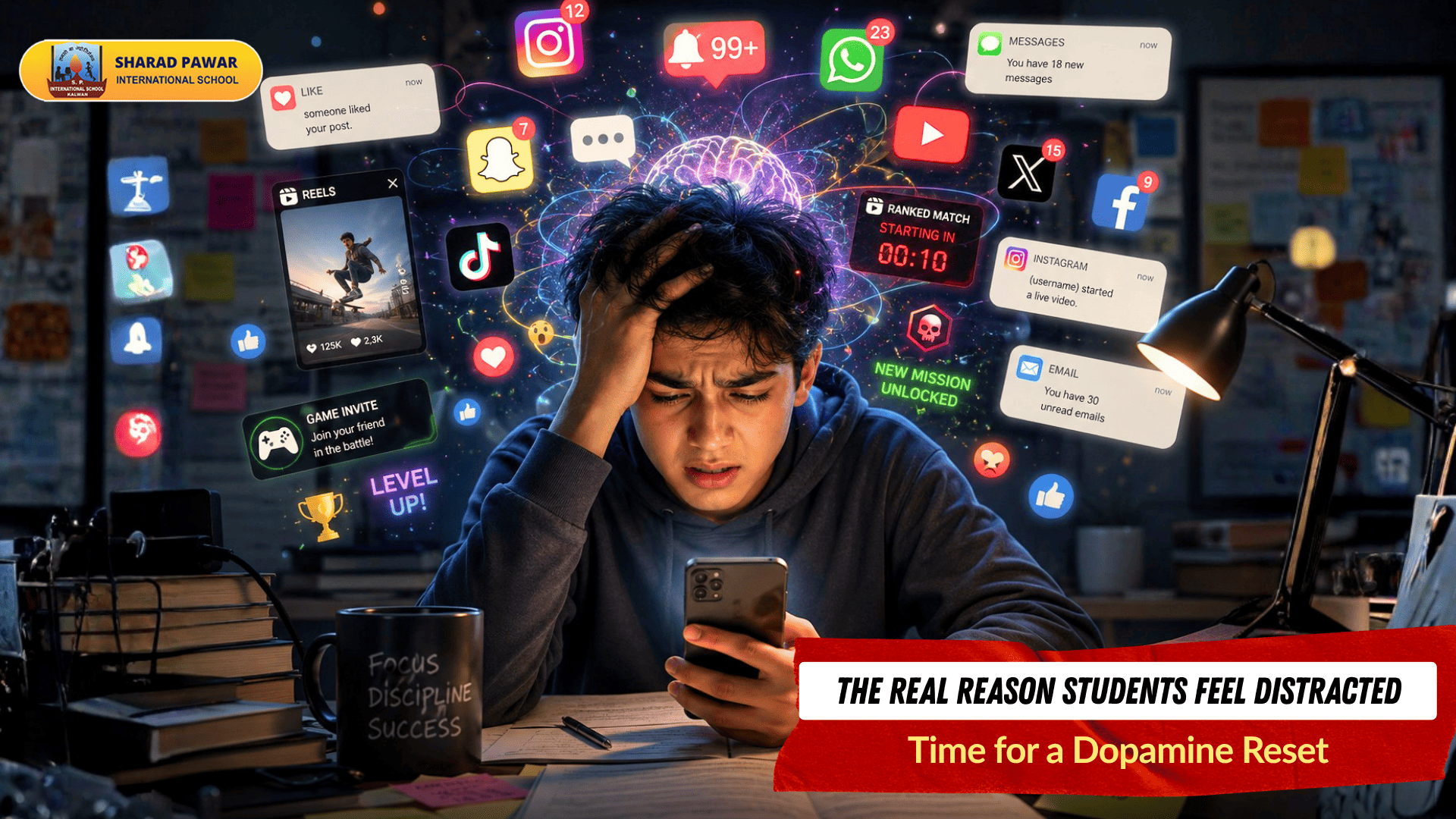
Why students need dopamine detox more than motivation in 2026. Learn how dopamine overload affects focus, productivity and student mental health.
Students today are more distracted than ever before. A quick check of notifications turns into 45 minutes of scrolling. One reel becomes twenty. A short gaming break becomes an entire evening gone. Even while studying, many students feel the constant urge to check their phones every few minutes.
And then comes the most common thought:
“Maybe I just need more motivation.”
But according to modern psychology and brain science, the problem is often not a lack of motivation. The real issue is dopamine overload.
This is why experts today believe students need a proper dopamine detox more than motivational speeches, productivity hacks or strict routines. In 2026, focus has become one of the rarest skills among teenagers and constant digital stimulation is a major reason behind it.
Schools and educational environments like Sharad Pawar International School (SPIS) are increasingly recognising the importance of balanced lifestyles, discipline, focus and healthy habits because student development today goes beyond academics alone.
But first, let’s understand what dopamine actually is.
What Is Dopamine?
Dopamine is often called the brain’s “feel-good chemical.” It is linked to pleasure, reward, excitement and motivation.
Every time students:
Scroll social media
Receive notifications
Watch reels
Play games
Eat junk food
Binge-watch content
Their brains get small dopamine spikes.
The problem is not dopamine itself. Dopamine is completely natural and important for human motivation. The real issue begins when the brain gets overloaded with constant instant stimulation.
Modern apps, short-form videos, gaming systems and social media platforms are specifically designed to keep attention hooked for long periods. As a result, the brain slowly becomes addicted to quick rewards. This is where the idea of a dopamine detox for students becomes important.
Why Students Struggle to Focus Today
Many teenagers feel frustrated because they cannot focus on studies for long periods anymore. Even simple tasks feel boring quickly. But this is not always laziness.
The brain today is constantly trained to expect:
Fast entertainment
Quick excitement
Instant rewards
Endless stimulation
Compared to scrolling reels or gaming, studying naturally feels slower and less stimulating. Over time, students lose patience with activities that require deep focus.
Today, many parents and educators feel students need dopamine detox to rebuild concentration and healthier routines.
This is why many teenagers procrastinate frequently, feel mentally exhausted, struggle with concentration, get distracted easily and lose consistency quickly. The issue is not always motivation. The issue is overstimulation.
What Is a Dopamine Detox?

A dopamine detox does not mean removing all happiness or entertainment from life.
It simply means reducing excessive stimulation so the brain can reset its reward system naturally.
For students, this could mean:
Reducing unnecessary screen time
Limiting social media usage
Avoiding constant multitasking
Spending more time offline
Creating healthier routines
The goal is not to completely avoid technology. The goal is to stop the brain from becoming dependent on nonstop stimulation.
The “Always Stimulated” Generation
In 2026, teenagers need dopamine detox not because technology is bad, but because balance and focus have become essential life skills.
The moment boredom appears, most students instantly:
Open Instagram
Watch YouTube
Check notifications
Switch to gaming
Scroll endlessly
As a result, the brain rarely gets moments of calmness or stillness.
Interestingly, brain science shows that boredom is actually healthy in moderation. It improves creativity, imagination, emotional processing and deeper thinking.
But constant stimulation removes those quiet mental spaces completely.
This is one reason why many students today feel mentally tired even without doing physically exhausting work.
Why Motivation Alone No Longer Works
Motivation feels powerful temporarily.
Students watch productivity videos, make schedules, feel inspired for one day and then quickly return to old habits. This cycle repeats again and again.
Why?
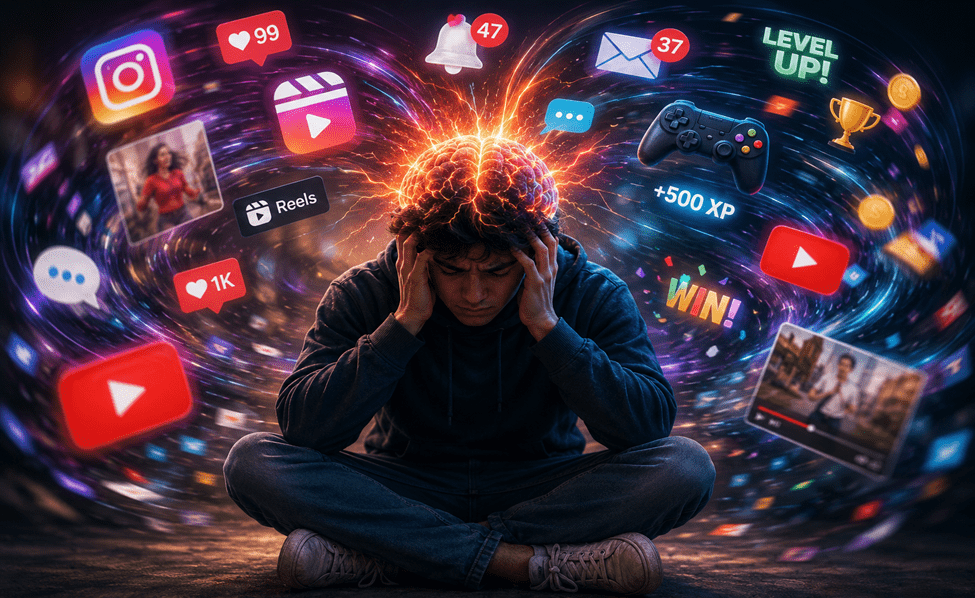
Because motivation cannot compete with constant dopamine overload.
When the brain becomes used to high stimulation, activities like studying, reading or focusing feel less rewarding. Students may genuinely want to improve but still struggle to stay consistent.
This is why building healthier habits matters more than depending only on motivation.
Why Students Need Dopamine Detox in 2026
Many teenagers don’t even realise their brains are overstimulated.
Experts believe students need dopamine detox because constant digital stimulation is reducing attention spans and focus levels.
Some common signs include:
- Constantly checking phones without reason
- Struggling to study for even short periods
- Feeling bored very quickly
- Difficulty sleeping on time
- Low patience levels
- Feeling mentally tired all the time
- Inability to enjoy simple activities
If these patterns feel familiar, the brain may simply need less stimulation and more balance.
How Dopamine Detox Helps Students
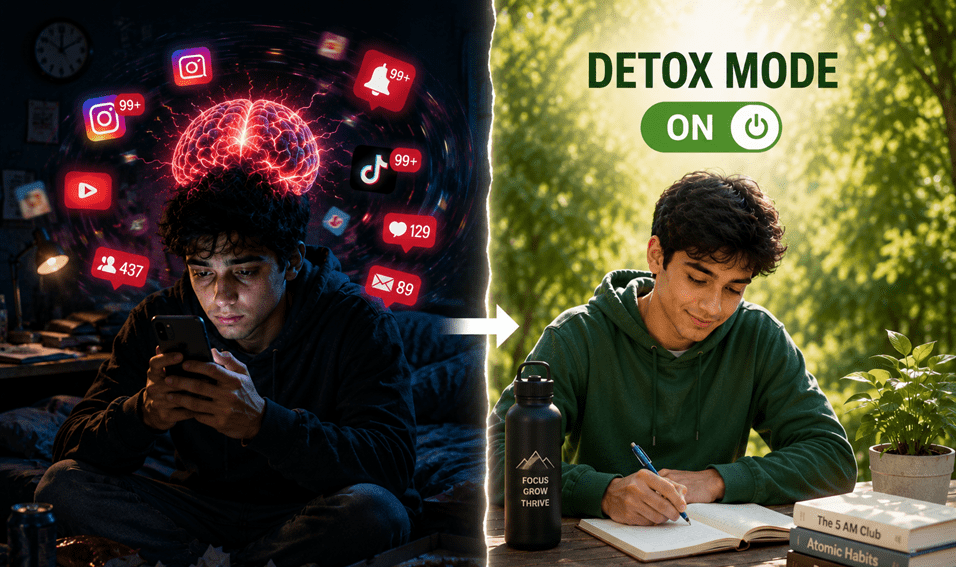
A healthy dopamine detox for students can improve:
Concentration
Sleep quality
Emotional balance
Productivity
Self-discipline
Mental clarity
Students often notice that after reducing excessive screen time, they feel calmer, more focused and mentally fresher. Even simple activities start feeling enjoyable again because the brain becomes less dependent on constant excitement.
Simple Dopamine Detox Habits Students Can Try
A dopamine detox does not need extreme rules. Small changes work surprisingly well.
Reduce Morning Screen Time
Avoid checking phones immediately after waking up. Starting the day without instant stimulation helps the brain stay calmer.
Take Social Media Breaks
Even short breaks from reels or endless scrolling improve mental clarity.
Spend More Time Outdoors
Nature, sports, walking and physical movement help the brain reset naturally.
Focus on One Task at a Time
Constant multitasking reduces concentration and increases mental fatigue.
Replace Some Screen Time with Real Experiences
Reading, hobbies, music, conversations or creative activities stimulate the brain in healthier ways.
Why Schools Are Focusing More on Balance Today
Modern education is changing because student challenges are changing too.
Today, schools are not only helping students academically. They are also helping students build:
Focus
Discipline
Emotional balance
Healthy routines
Confidence
Educational environments like SPIS encourage holistic development because long-term success depends not only on intelligence but also on habits, concentration, consistency and emotional well-being.
A Message for Teenagers
If you struggle with focus today, you are not alone.
Most students are growing up in a world designed to constantly compete for attention. Your brain is not weak; it is overstimulated.
You do not need to become “perfect” overnight. You simply need a healthier balance.
Small changes matter:
Less endless scrolling
More real experiences
Healthier routines
Proper sleep
Quieter moments
Over time, your focus improves naturally.
Conclusion
In 2026, the biggest challenge for students is not a lack of intelligence or ambition. It is a constant distraction.
The modern digital world has created an environment where the brain rarely gets rest from stimulation. This is why many students need dopamine detox more than endless motivation.
Reducing overstimulation, improving routines, spending time offline and building healthier habits can dramatically improve focus, productivity, emotional well-being and confidence. Because sometimes the brain does not need more excitement. It simply needs a chance to slow down.
Frequently Asked Questions (FAQs)
1. What is dopamine detox for students?
A dopamine detox means reducing excessive stimulation from screens, social media, gaming and constant digital distractions.
2. Why do students struggle to focus today?
Constant digital stimulation trains the brain to expect quick rewards, making deep focus more difficult.
3. Does dopamine detox improve concentration?
Yes, reducing overstimulation can improve focus, sleep, productivity and emotional balance.
4. Do students need to completely stop using phones?
No, the goal is balance and mindful usage, not complete removal of technology.
4. Do students need to completely stop using phones?
No, the goal is balance and mindful usage, not complete removal of technology.
5. How can students naturally improve focus?
Healthy routines, reduced screen time, outdoor activities, proper sleep and balanced habits help improve focus naturally.

Founded in 1997 under the aegis of “Shree Gurudatta Education Society". Aims to develop future leaders. Curriculum is based on CBSE New Delhi.