



Table of Contents
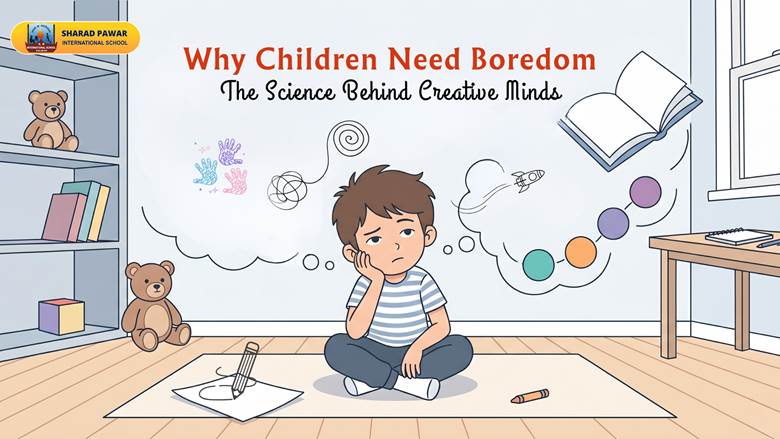
“Mom, I’m bored.”
How Boredom Helps Children’s Brain Development For many parents, this sentence immediately sounds like a problem that needs to be fixed. The instant reaction is often to hand over a phone, switch on YouTube, suggest a game or find some kind of entertainment. In today’s digital world, children are rarely left alone with boredom for more than a few minutes.
But according to modern psychology and brain science, boredom is not always harmful. In fact, experts now believe that boredom plays a very important role in children’s brain development, creativity, emotional balance and problem-solving ability. Surprisingly, children often grow mentally during the quiet moments that adults try hardest to remove.
Today’s generation is growing up in a world filled with constant stimulation. Reels, notifications, gaming, short videos and social media have made the brain used to nonstop entertainment. This is why understanding the importance of boredom has become more relevant than ever for parents, students and educators.
Learning environments like Sharad Pawar International School (SPIS) are also increasingly focusing on balanced student development because real growth does not happen only through academics. Creativity, independent thinking, emotional well-being and curiosity are equally important for children today.
The Modern Childhood Problem: Constant Entertainment
Childhood today looks very different compared to earlier generations. Earlier, children spent more time outdoors, invented games, explored nature, cycled with friends or simply sat around imagining things. Those moments may have looked “boring,” but they actually gave the brain time to think creatively.
Today, the moment boredom appears, children immediately turn toward screens. A few seconds of silence quickly become scrolling, gaming or consuming content online. Modern technology is designed to keep attention engaged constantly and over time, children become uncomfortable with stillness itself.
The problem is not technology alone. The real concern begins when children lose the ability to stay mentally calm without constant stimulation. This affects patience, creativity, emotional balance and focus more than most people realise.
What Brain Science Says About Boredom
Interestingly, brain science shows that boredom activates important parts of the brain linked to imagination, reflection, creativity and deeper thinking. When the brain is not busy consuming fast entertainment, it begins creating its own thoughts and ideas naturally.
This is why many creative ideas come during quiet moments while walking, staring outside a window, travelling or simply doing nothing. The brain needs occasional mental space to process emotions, think independently and develop imagination.
Children especially benefit from this process because their brains are still developing rapidly. When they are constantly entertained, they spend more time consuming ideas instead of creating their own. But boredom pushes the brain toward curiosity and creativity.
This is one reason why experts today are increasingly discussing the connection between brain development in children and unstructured free time.
Why Children Today Struggle with Boredom
Many children today find boredom unbearable because their brains are used to instant rewards. Social media, games and short-form videos constantly stimulate the brain through quick excitement and fast-changing content. As a result, slower activities begin to feel “too boring” very quickly.
This is why many students struggle to focus on reading, studying or activities that require patience. Their attention systems slowly adapt to fast entertainment rather than deep concentration. The issue is not that children are becoming less intelligent. In many cases, their brains are simply becoming overstimulated. Constant digital consumption leaves very little space for stillness, imagination or independent thinking.
This is also connected to growing concerns around attention span problems in students and screen addiction in children today.

How Boredom Helps Children’s Brain Development
Boredom Helps Creativity Grow
One of the biggest benefits of boredom is that it encourages creativity naturally. When children are not immediately entertained, the brain starts searching for ways to stay engaged. This often leads to imagination, experimentation and creative thinking.
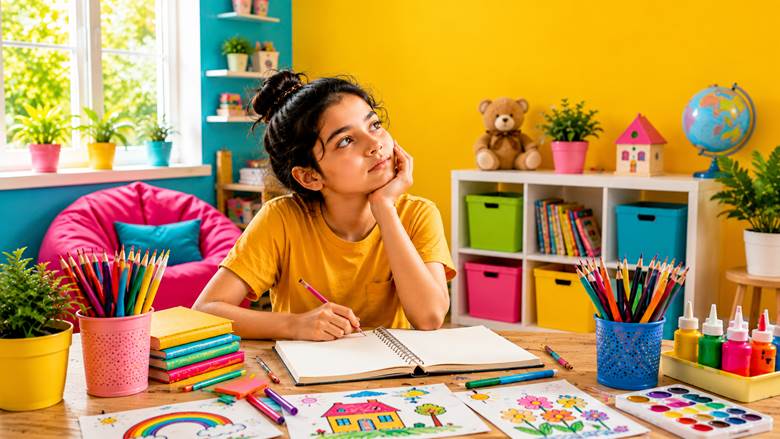
A bored child may suddenly start drawing, creating stories, inventing games, building things or exploring new hobbies. These moments are extremely valuable because they teach children how to think independently instead of constantly depending on external entertainment.
Creativity rarely develops during nonstop stimulation. It grows during slower moments when the brain has room to wander, observe and imagine freely.
Interestingly, many children discover their real interests during unstructured free time rather than during highly scheduled routines.
Why Constant Stimulation Is Mentally Exhausting
Many teenagers today feel mentally tired all the time even when they are not physically exhausted. One major reason is constant stimulation.
The brain rarely gets proper rest from notifications, videos, music, gaming, scrolling and multitasking. Modern digital habits overload attention systems continuously, which eventually leads to mental fatigue, irritability, reduced focus and emotional exhaustion.
Boredom actually gives the brain a chance to slow down and recover. Quiet moments improve self-awareness, emotional processing and mental clarity. This is why activities like journaling, walking outdoors, reading peacefully or sitting quietly can feel surprisingly refreshing.
The human brain was never designed to consume stimulation every second of the day.
The Connection Between Boredom and Attention Span
Attention span has become one of the biggest concerns among students today. Many children struggle to stay focused for long periods because their brains are constantly trained to expect quick excitement and fast rewards.
Boredom teaches something extremely valuable: patience. When children experience slower moments, they slowly learn how to tolerate silence, focus deeply and stay engaged without instant stimulation. This directly helps concentration and emotional control.
Students who occasionally disconnect from constant entertainment often find it easier to focus on studies, hobbies, reading and creative activities because their brains become less dependent on nonstop stimulation.
Why Unstructured Time Matters for Children
Modern childhood has become heavily scheduled. Children move constantly between school, tuition, classes, activities and screens. While opportunities and learning are important, children also need free time where nothing specific is planned.
Unstructured time allows children to observe, imagine, reflect and think independently. It helps emotional growth and encourages curiosity naturally.
Some of the most meaningful childhood memories come from simple moments, evening walks, random games, conversations with friends, rainy afternoons, cycling outdoors or simply sitting peacefully without distractions.
Children do not always need constant entertainment. Sometimes they simply need space to be themselves
The Role of Schools in Balanced Child Development
Education today is evolving because the challenges children face are also changing. Schools are now focusing not only on academics but also on creativity, emotional well-being, independent thinking and balanced lifestyles.
Institutions like SPIS recognise that healthy child development includes much more than marks and exams. Students also need opportunities for curiosity, self-expression, outdoor learning and creative exploration.
Balanced learning environments help children become more confident, emotionally healthier and mentally stronger in the long run.
A Message for Parents
Parents often feel pressured to keep children engaged every second because boredom looks uncomfortable. But boredom is not necessarily harmful.
Allowing children occasional quiet time may actually support healthier brain development. Children do not always need screens, entertainment or activities to stay occupied.
Sometimes the best thing adults can do is simply allow children to slow down, imagine, create and think independently.
The goal is not removing technology completely. The goal is to create balance.
A Message for Teenagers
If you constantly feel uncomfortable whenever things become quiet, you are not alone. Modern apps and platforms are designed to capture attention continuously.
But learning to occasionally disconnect can help your brain feel calmer, clearer and more focused. Some of your best ideas may actually come during moments when you are not consuming anything at all.
Boredom is not wasted time. Sometimes it is where creativity quietly begins.
Frequently Asked Questions (FAQs)
1. Why is boredom important for children?
Boredom encourages creativity, imagination, independent thinking and emotional growth.
2. Does boredom help brain development?
Yes, research suggests that unstructured time supports creativity and healthy brain function.
3. How does excessive screen time affect children?
Too much screen stimulation can reduce attention span, patience, focus and creativity.
4. Should parents constantly entertain children?
No, children also benefit from quiet time, free play and moments without constant stimulation.
5. Can boredom improve creativity in students?
Yes, boredom encourages students to think independently and develop creative ideas naturally.

Founded in 1997 under the aegis of “Shree Gurudatta Education Society". Aims to develop future leaders. Curriculum is based on CBSE New Delhi.